
English vocabulary and phrases on Mid-Autumn Festival








IELTS Listening is one of the four crucial skills in the IELTS exam, accounting for 25% of the total score. With a time limit of approximately 30 minutes (plus 10 minutes for answering), candidates must listen to four audio recordings and answer 40 questions. To achieve a high score in this section, learners need not only strong listening comprehension but also an effective practice strategy.
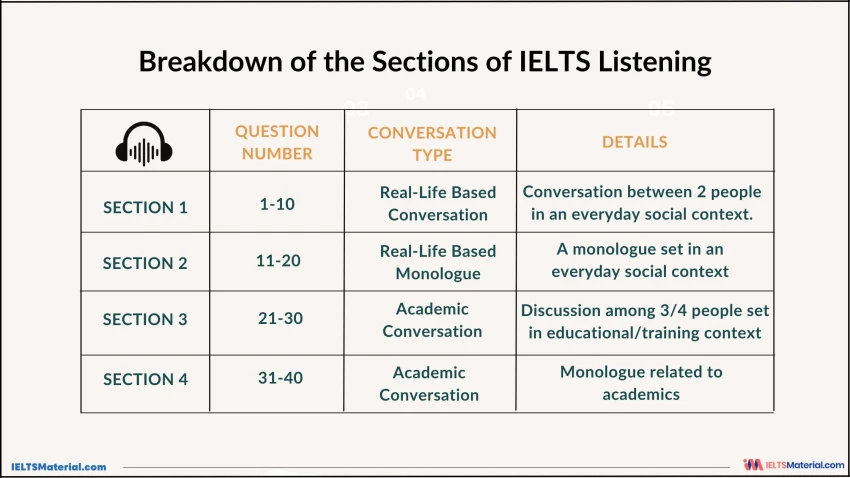
The Listening section consists of four parts with increasing difficulty, challenging your comprehension skills across various real-life contexts:
Part 1: A casual conversation between two people, such as booking a hotel room or asking for travel information – seemingly easy, but full of pitfalls!
Part 2: An interesting monologue, such as a guided tour or a public announcement, which requires you to keep up with the fast pace.
Part 3: A group conversation (2–4 people) in an academic setting, like students discussing a project, demanding high levels of concentration.
Part 4: A specialized academic lecture presented by one speaker, testing your ability to grasp both the main ideas and specific details.
Elevate real-world listening skills: Familiarize yourself with diverse English accents (British, American, Australian, Canadian) so you won't be surprised on test day.
Adapt to natural speaking speed: The audio is played only once, requiring quick reaction and precision.
Train memory and rapid thinking: Catch the main ideas and recall details in a split second.
Boost your overall band score: A solid Listening score serves as a powerful foundation for an impressive overall IELTS result.
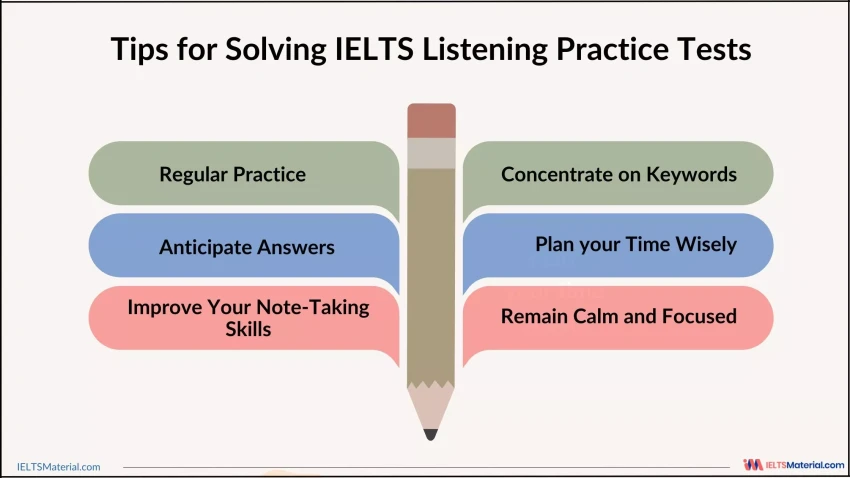
Listen every day, all the time: "Immerse" yourself in English using quality sources like BBC Learning English, TED Talks, or Podcasts to get used to natural speech.
Practice with authentic Cambridge tests: Use the Cambridge IELTS series (Volumes 6–18) to become familiar with the actual test format. Repeat practice to master every question type!
Analyze your mistakes in detail: After each test, check the answers and understand why you made mistakes to avoid repeating them.
Dictation practice: Sharpen your word recognition ability and improve spelling – a small but powerful skill.
Smart note-taking: Focus on jotting down keywords instead of trying to write down full sentences, helping you keep up with the audio more easily.
Not reading the questions before listening: This will leave you lost, not knowing what information to look for.
Passive listening without prediction: Try to predict vocabulary or content to be more proactive during the test.
Lack of practice with diverse accents: Encountering unfamiliar Australian or Canadian accents can easily confuse you.
Neglecting to check spelling and grammar: A small error can unfairly cost you a point.
Cambridge IELTS (Volumes 6–18): Standardized test papers, closely aligned with the actual exam.
IELTS Liz: A source of free tips and exercises, extremely useful for beginners.
BBC Learning English, TED Talks, VOA Learning English: These "treasures" will help you enhance natural listening skills and enrich your vocabulary.
Preparing for IELTS Listening is not just a journey to improve comprehension, but also an opportunity to master English in real life. With persistence, a smart strategy, and accurate materials, a band score of 7.0–8.0+ is absolutely within reach! Start today, turn every practice hour into a steady step toward your IELTS goal!
Immediate Action: Download an audio track from Cambridge IELTS and try applying the smart note-taking tips. You will see the difference!
English vocabulary and phrases on Mid-Autumn Festival

Tips to improve vocabulary in communication

English vocabulary by topic: Clothes

The secret to remembering all 50 English vocabulary words every day easily

English vocabulary by topic: Human body

Vocabulary of the most popular subjects in English

Learn English about Covid: All about vocabulary and disease prevention

Vocabulary of Subjects in English

Set of 60 English vocabulary on educational topics

Vocabulary - just a small thing!
Comment ()