What is armour? Pronunciation and usage in English

armour means . Learn how to pronounce and use armour through vivid examples and easy-to-understand exercises.

Definition & pronunciation of armour

armournoun

/ˈɑːmə(r)//ˈɑːrmər/
Definition & pronunciation of armour

The pronunciation of "armour" in English can be a little tricky because it's a word with a slightly unusual sound. Here’s a breakdown:

Most Common Pronunciation (British English):

  • ˈɑːrmər (rhymes with “farmer”) - This is the classic British pronunciation.
    • ˈɑː - The first syllable sounds like the "ar" in "father" (but shorter).
    • rm - The "rm" is pronounced as a single sound, not separately. It’s a bit like “arm” but with a slightly more closed mouth.
    • -ər - The final "ər" is a schwa sound – a weak, short "uh" sound (like the "a" in "about").

American English Pronunciation:

  • ˈɑːrmər (also similar to British, but with a slightly different emphasis) - Americans typically pronounce it almost identical to the British pronunciation.

Key Points to Remember:

  • Don't stress the "r" separately: Many learners mistakenly say "arm-or." It’s a single sound.
  • The "r" is subtle: The “r” sound is less pronounced than in Spanish or Italian. It’s a softer "r" sound.

Resources for Hearing the Pronunciation:

To help me tailor the explanation even more, would you like:

  • To hear the pronunciation spoken aloud? (I can't directly provide audio, but I might be able to describe the sounds in more detail).

Usage and examples with the word armour in English

Let's break down how to use the word "armour" in English. It's a fascinating word with a rich history and a few slightly different nuances.

1. Core Meaning: Protective Covering

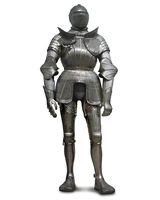
At its most basic, "armour" refers to a protective covering, primarily for the body. This is the most common usage.

  • Example: "The knight wore shining armour to protect him in battle."
  • Example: "Ancient Roman soldiers used bronze armour."
  • Example: "She wore a motorcycle armour suit to prevent injuries."

2. Types of Armour

  • Historical Armour: This refers to the metal or other materials used to protect warriors in the past – plate armour, chainmail, helmets, etc.
  • Modern Armour: This includes:
    • Military Armour: Modern soldiers use body armour made of materials like Kevlar or ceramics.
    • Motorcycle Armour: As mentioned above, protective gear for motorcyclists.
    • Other Protective Armour: Things like helmets for cycling or skiing, padded jackets, etc. – anything designed to absorb impact and prevent injury.

3. Figurative Usage – "Armour Up"

This is a very common and useful idiomatic expression. It doesn't literally mean putting on metal.

  • Meaning: To prepare yourself mentally or emotionally for a difficult situation or challenge. To become resilient and strong.
  • Example: "I'm really nervous about the presentation, but I need to armour up and focus on doing my best."
  • Example: “She needed to armour up her courage before speaking in public.”

4. Armour (as a Noun - less common)

Sometimes, "armour" is used more generally to describe a feeling of protection or defense:

  • Example: "He built up an armour of cynicism after years of dealing with difficult people." (Meaning he developed a protective, defensive attitude).
  • Example: "The company presented a strong armour of legal documents to protect its interests." (Meaning a strong defense).

5. Armour (as a Verb - very rare)

This usage is extremely rare and usually found in archaic or formal writing:

  • Meaning: To cover with armour; to protect with armour.
  • Example (historical): “The castle was armoured against attack.” (Meaning it was fortified and protected). You'll almost never hear this used in everyday speech.

Key Differences Between “Armor” and “Armour”

This is a common source of confusion!

  • “Armour” is the British (and more common in formal English) spelling.
  • “Armor” is the American spelling.

Both words refer to the same thing – protecting with covering.


Resources for More Information:

To help me give you even more specific guidance, could you tell me:

  • What context are you thinking about using "armour" in? (e.g., writing a historical story, having a conversation about safety gear, etc.)

Idioms of the word armour

a chink in somebody’s armour
a weak point in somebody’s argument, character, etc., that can be used in an attack
    a knight in shining armour
    (usually humorous)a man who saves somebody, especially a woman, from a dangerous situation
    • She's still waiting for a knight in shining armour to come and rescue her.

    Comment ()