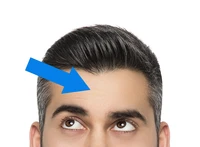
What is brow? Pronunciation and usage in English

brow means . Learn how to pronounce and use brow through vivid examples and easy-to-understand exercises.

Definition & pronunciation of brow

brownoun

/braʊ//braʊ/
Definition & pronunciation of brow

Okay, let's break down how to pronounce "brow." It's a little tricky for some learners! Here's a breakdown:

The most common, and generally accepted, pronunciation is:

  • [ˈbraʊ]

Let's break that down syllable by syllable:

  • "br": This sounds like the "br" in "brother" – a short, crisp "br" sound.
  • "ow": This is the key! It's pronounced like the "ow" in "cow," "how," or "now." It’s a rounded vowel sound, made by rounding your lips as if you're going to say "ooo."

Putting it together: Say it slowly: "Br-ow" (really emphasizing the "ow" sound).

Here's a helpful tip: Imagine you're saying "brow" as if you're describing something on someone's face.

Resources for Hearing it:

  • Forvo: https://forvo.com/word/brow/ – This site lets you hear native speakers pronounce the word.
  • Google Translate: Type "brow" into Google Translate and click the speaker icon.

Important Note: There's a less common pronunciation that some people use, particularly in certain dialects, that sounds like [broʊ]. However, the [ˈbraʊ] pronunciation is overwhelmingly the standard.

Do you want me to:

  • Record an example of how to say "brow"?
  • Give you a similar word to practice with?

Usage and examples with the word brow in English

Let's break down how to use the word "brow" in English. It has several different meanings, so it's important to understand the context. Here's a breakdown categorized by usage:

1. The Eyebrow (Most Common)

  • Definition: The arched skin above the eye.
  • Usage: This is the most frequent meaning.
  • Examples:
    • "She raised her brows in surprise." (Expressing surprise)
    • "He furrowed his brows in concentration." (Showing deep thought)
    • "Her brows were thick and dark." (Describing appearance)
    • "He scratched his brow with his finger." (Physical action)
    • "Strong brows can be very expressive."

2. The Ridge of the Forehead (The Brow Ridge)

  • Definition: The bony part of the forehead just above the eyebrows.
  • Usage: This refers to the actual bone structure.
  • Examples:
    • "He had a prominent brow ridge." (Describing a noticeable forehead ridge)
    • “Geneticists are studying the brow ridge to identify links to certain diseases.” (Scientific context)

3. A Shade or Tint (Like a Brow of Color)

  • Definition: A slightly darker shade of something, similar to the "brow" of a color.
  • Usage: Often used in art or descriptions of dyes.
  • Examples:
    • "The paint had a dark brow at the bottom." (Referring to a darker edge of color)
    • “The dye gave the hair a lovely dark brow.” (Describing the shade of the dye)

4. A Ridge or Border (More Figurative)

  • Definition: A line or border, often suggesting something is edging forward.
  • Usage: More metaphorical; less common, but valid.
  • Examples:
    • "A brow of clouds covered the mountains.” (Referring to a line of clouds)
    • "There was a brow of thorns along the path." (Border of thorns)

5. Brow (as a Verb – Less Common)

  • Definition: To shade darker or darken.
  • Usage: Used mainly in the context of paint or dye.
  • Example: “The artist bowed the color to create a more atmospheric effect.”

Helpful Tips & Related Words:

  • Phrases: You'll often hear "raise a brow," "lower a brow," "furrow a brow," "arch a brow," etc., all referring to eyebrow movements.
  • Synonyms: You can use alternatives like “eyebrow,” “forehead,” “eyelid,” or descriptive words like “raised,” "furrowed," "thick," "thin," “arched,” “straight.”

To help me give you even more tailored advice, could you tell me:

  • What kind of context are you using "brow" in? (e.g., describing someone's appearance, writing a story, talking about art, etc.)

Idioms of the word brow

knit your brow(s)
to move your eyebrows together, to show that you are thinking hard, feeling angry, etc.
  • His brows were knitted in a permanent frown.
  • She knitted her brows in concentration.

Practice with vocabulary brow

Exercise 1: Fill in the blanks

  1. The CEO wiped a bead of sweat from his ____ as he reviewed the challenging quarterly report.
  2. From the ____ of the cliff, the lighthouse beam pierced the thick fog, guiding ships safely to port.
  3. After a long day of intense concentration, he gently massaged his ____ to relieve the tension.
  4. The hikers finally reached the ____ of the mountain, exhausted but exhilarated by the achievement.

Exercise 2: Choose the correct answer (select all that apply)

  1. Which of the following terms can describe the uppermost part or edge of a steep slope? a) Peak b) Ridge c) Brow d) Summit

  2. When someone furrows their ____, it often indicates concentration or concern. a) Cheeks b) Brow c) Chin d) Nose

  3. The architectural team designed the building to sit elegantly on the ____ of the hill, offering expansive views. a) Base b) Crest c) Brow d) Valley

  4. Identify the facial feature located directly above the eye, from which hair often grows. a) Eyelid b) Temple c) Eyebrow d) Lash

  5. Which words describe a distinct, elevated line of land, often forming a divide? a) Groove b) Ridge c) Canyon d) Summit


Exercise 3: Rewrite the sentences

  1. The old man's forehead was wrinkled with deep lines from years of worry and thought.
  2. They paused at the edge of the precipice to admire the vastness of the ocean stretching before them.
  3. The student's face showed clear signs of confusion during the complex lecture.

Answer:

Exercise 1: Fill in the blanks

  1. brow
  2. brow
  3. forehead
  4. summit

Exercise 2: Choose the correct answer

  1. b) Ridge, c) Brow, d) Summit
  2. b) Brow
  3. b) Crest, c) Brow
  4. c) Eyebrow
  5. b) Ridge, d) Summit

Exercise 3: Rewrite the sentences

  1. Deep lines etched the old man's brow, testament to years of worry and thought.
  2. They paused at the brow of the precipice to admire the vastness of the ocean stretching before them.
  3. The student's expression showed clear signs of confusion during the complex lecture.

Comment ()