What is carnival? Pronunciation and usage in English

carnival means . Learn how to pronounce and use carnival through vivid examples and easy-to-understand exercises.

Definition & pronunciation of carnival

carnivalnoun

/ˈkɑːnɪvl//ˈkɑːrnɪvl/
Definition & pronunciation of carnival

Okay, let's break down how to pronounce "carnival" in English. It's a tricky one because it doesn't follow typical English pronunciation rules! Here's a breakdown:

The most common and accepted pronunciation is:

  • /ˈkɑːrnɪvəl/ (American English)
  • /kɑːrnɪvəl/ (British English)

Let's break it down syllable by syllable:

  1. "car": Pronounced like "car" as in the car you drive - /kɑːr/ (The "a" is a broad "ah" sound)

  2. "ni": Pronounced like "knee" - /ni/

  3. "val": This is the tricky part! It’s NOT pronounced "val" like in "value." It's pronounced like "vel" but with a slightly softer "v" sound. Think of it like saying "vel" but almost blending together with the "ni" sound. /vəl/

Putting it all together:

You're essentially saying: "car-knee-vel"

Tips for getting it right:

  • Stress: The stress is on the first syllable ("car").
  • The "v" sound: Don't overemphasize the "v" – it’s more like a blended sound with the "n."
  • Listen to examples: The best way to learn is to hear it. Search on YouTube for "how to pronounce carnival" and listen to native English speakers.

Resources for Hearing Pronunciation:

Would you like me to:

  • Break down any part of the pronunciation more?
  • Give you some example sentences to say it in context?

Usage and examples with the word carnival in English

Let's break down how to use the word "carnival" in English. It has a few different meanings and usages!

1. The Traditional Carnival (Festive Event):

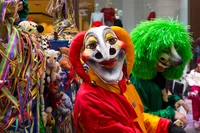
  • Definition: This is the most common understanding of "carnival." It refers to a period of celebration, typically leading up to Lent (the 40 days before Easter). It’s characterized by parades, music, dancing, games, and often elaborate costumes.
  • Usage Examples:
    • "We went to the carnival last weekend – there were amazing floats and so much food!"
    • "Venice Carnival is famous for its beautiful masks and gondola rides."
    • “The whole city was decorated in a festive mood, anticipating the start of the carnival.”
    • “She spent months designing her costume for the Caribbean carnival.”

2. A Fair or Festival (General Sense):

  • Definition: “Carnival” can also be used more broadly to describe any large, lively fair or festival with rides, games, food stalls, and entertainment. It’s not necessarily tied to the religious observance.
  • Usage Examples:
    • "The local community held a carnival in the park to raise money for the school."
    • “They ran a small carnival for the children’s birthday party.”
    • “He loved the carnival atmosphere with the flashing lights and the smell of popcorn.”

3. (Figurative) A Time of Great Excitement or Revelry:

  • Definition: Less common, but "carnival" can be used metaphorically to describe a time of intense excitement, celebration, or even chaos.
  • Usage Examples:
    • "The launch of the new product caused a real carnival of activity at the company." (Meaning a lot of excited work being done)
    • “The political rally turned into a chaotic carnival as protestors clashed with police.” (Describing a lively, perhaps unruly, scene)

Key Things to Remember:

  • Context is Crucial: The meaning of "carnival" depends heavily on the context.
  • Regional Variations: The traditions and customs associated with "carnival" vary greatly around the world (Brazil, Venice, Trinidad & Tobago, etc.).
  • Capitalization: When referring to a specific, well-known carnival (like the Venice Carnival), it’s often capitalized. When used generally, it's lowercase.

Resources for More Information:

To help me give you even more targeted advice, could you tell me:

  • What are you trying to write or say that involves the word "carnival"?

Comment ()