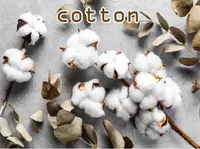
What is cotton? Pronunciation and usage in English

cotton means . Learn how to pronounce and use cotton through vivid examples and easy-to-understand exercises.

Definition & pronunciation of cotton

cottonnoun

/ˈkɒtn/
Definition & pronunciation of cotton

Okay, let's break down how to pronounce "cotton" in English. It's a common stumbling block for non-native speakers!

Here's the breakdown:

  • cot - pronounced like "cot" (as in a bed) - /kɒt/
  • ton - pronounced like "ton" (as in a weight) - /tən/

Putting it together: /kɒtən/

Key Points:

  • Emphasis: The emphasis is on the first syllable, "cot."
  • "t" sound: The 't' in "ton" is a clear, sharp 't' sound, not a soft 'tt' sound.
  • Vowel sound: The vowel sound in "cot" is a short "o" sound, similar to the "o" in "hot" or "pot." The vowel sound in "ton" is a short "u" sound.

Resources to help you hear it:

  • Google Search: Just type "how to pronounce cotton" into Google, and you'll find audio examples.
  • Forvo: https://forvo.com/word/cotton/ - This website lets you hear the word pronounced by native speakers from different regions.

Do you want me to:

  • Repeat the pronunciation slowly?
  • Give you some similar-sounding words to practice with?

Usage and examples with the word cotton in English

Let's break down how to use the word "cotton" in English. It has several different meanings and uses. Here's a detailed explanation:

1. As a Fabric:

  • Most Common Use: This is the most frequent way you'll hear and use "cotton." It refers to a soft, fluffy natural fiber derived from the cotton plant.
    • Examples:
      • "I'm wearing a cotton shirt." (describing the material)
      • "This dress is made of 100% cotton." (specifying the fabric content)
      • "She bought a cotton blanket for the winter."
      • "He loves the feel of cotton on his skin."

2. As a Plant (the Cotton Plant):

  • Botanical Meaning: "Cotton" can also simply refer to the plant that produces the fiber.
    • Examples:
      • "The cotton fields were white with bloom." (describing the plant in full flower)
      • "Farmers were harvesting the cotton crop."
      • "He studied cotton genetics at university."

3. As a Product (Cotton Goods):

  • Refers to items made from cotton: This extends beyond just the fabric itself.
    • Examples:
      • "I need to buy some cotton swabs for cleaning." (medical supplies)
      • "She made a lovely cotton quilt." (a practical item)
      • “He bought a cotton handkerchief.”

4. Figurative Usage (Less Common):

  • Light, Airy, or Weak: Occasionally, "cotton" is used figuratively to describe something light, airy, weak, or insubstantial. This is less common in modern usage.
    • Examples:
      • "His excuses were just cotton-wool." (meaning flimsy and unreliable) - This usage is somewhat dated.
      • “He was as light as cotton.” (describing a feeling of lightness)

Key Words & Phrases Related to Cotton:

  • Cottonseed: The seeds from the cotton plant, often used for oil and animal feed.
  • Raw Cotton: Unprocessed cotton fiber.
  • Processed Cotton: Cotton that has been spun, woven, or knitted into fabric.
  • Cotton Blend: Fabric made from a mix of cotton and another fiber (like polyester).
  • Cotton Gin: The machine used to separate cotton fibers from their seeds.

Tips for Using "Cotton" Correctly:

  • Context is Key: Pay attention to the surrounding words to understand which meaning of “cotton” is intended.
  • Be Specific: When describing fabric, be clear about the type of cotton (e.g., Egyptian cotton, organic cotton, Pima cotton) for greater precision.

Do you want me to:

  • Give you more examples of how to use "cotton" in a particular sentence?
  • Explain the differences between different types of cotton?
  • Discuss the history of the cotton industry?

Practice with vocabulary cotton

Exercise 1: Fill in the blanks

  1. The textile industry heavily relies on the cultivation of ______ to produce various fabrics.
  2. The factory specializes in producing high-quality denim and other robust ______ for apparel.
  3. Historically, ______ played a crucial role in the economies of many southern states.
  4. Climate change poses a significant threat to agricultural ______, leading to potential food shortages.

Exercise 2: Choose the correct answer (There may be multiple correct answers per question)

  1. Which of the following is a natural fiber commonly used in the production of everyday apparel? (a) Polyester (b) Nylon (c) Cotton (d) Spandex (e) Linen

  2. A factory producing absorbent medical supplies would likely use which material for its primary product? (a) Silk (b) Cotton (c) Leather (d) Metal (e) Rubber

  3. Which of these characteristics are generally associated with a high-quality cotton shirt? (a) Excellent insulation for extreme cold (b) Breathability (c) High absorbency (d) Wrinkle resistance (e) Hypoallergenic properties

  4. When discussing the softness of a new blanket, which adjectives are most appropriate? (a) Coarse (b) Plush (c) Rough (d) Silky (e) Supple

  5. In the context of textile production, a primary raw material extracted from plants is known as a: (a) Mineral (b) Polymer (c) Fiber (d) Resin (e) Alloy

Exercise 3: Rewrite the sentences

  1. Original: Many people choose clothing made from natural fibers because they are comfortable and allow air to pass through. Rewrite using "cotton":

  2. Original: The economy of several southern states in the 19th century largely depended on the farming of this specific plant. Rewrite using "cotton" or a related word form:

  3. Original: The company's sustainable practices include sourcing raw materials that are biodegradable and eco-friendly. Rewrite without using "cotton" or its forms, replacing "raw materials" with a suitable alternative:


Answer:

Exercise 1:

  1. cotton
  2. fabric
  3. cotton
  4. crops

Exercise 2:

  1. (c) Cotton, (e) Linen
  2. (b) Cotton
  3. (b) Breathability, (c) High absorbency, (e) Hypoallergenic properties
  4. (b) Plush, (d) Silky, (e) Supple
  5. (c) Fiber

Exercise 3:

  1. Many people choose cotton clothing because it is comfortable and breathable.
  2. The economy of several southern states in the 19th century largely depended on cotton cultivation.
  3. The company's sustainable practices include sourcing raw fibers that are biodegradable and eco-friendly.

Comment ()