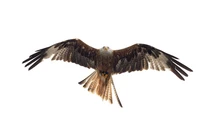
What is eagle? Pronunciation and usage in English

eagle means . Learn how to pronounce and use eagle through vivid examples and easy-to-understand exercises.

Definition & pronunciation of eagle

eaglenoun

/ˈiːɡl//ˈiːɡl/
Definition & pronunciation of eagle

Okay, let's break down how to pronounce "eagle" in English. Here's a breakdown:

The most common and widely accepted pronunciation is:

  • /ˈiːɡl/ (This is phonetic spelling - a guide to how it's pronounced)

Let's break that down further:

  • ˈiː - This is the stressed syllable. It sounds like "ee" as in "see." The 'ˈ' symbol indicates the stressed syllable.
  • ɡ - This is a hard "g" sound, as in "goat."
  • l - This is a simple "l" sound.

Here's a more detailed explanation with sounds:

  1. Start with a long "ee" sound: Think of the word "see" or "meet." That's the starting sound.
  2. Add a hard "g" sound: Immediately after the "ee" sound, say the "g" as in "goat."
  3. Add an "l" sound: Finish with a quick “l” sound, like in “light”.

Resources to hear it:

Do you want me to:

  • Repeat the pronunciation slowly?
  • Give you some other similar words to practice?

Usage and examples with the word eagle in English

Let's break down how to use the word "eagle" in English. It's a powerful word with a lot of different meanings and uses.

1. The Bird – The Most Common Meaning

  • Definition: An eagle is a large, powerful bird of prey (a bird that hunts and eats other animals). They’re known for their keen eyesight, strong talons, and impressive wingspans.
  • Examples:
    • "We watched an eagle soar over the mountains."
    • "The bald eagle is the national bird of the United States."
    • "I saw a magnificent golden eagle hunting in the desert."
    • “The eagle landed on the branch.”

2. Figurative Meanings – Symbolism

Because of their majestic appearance and strength, eagles are often used as symbols:

  • Freedom: Eagles are frequently associated with freedom, independence, and soaring above limitations.
    • “She felt a sense of freedom after leaving her job.” (Using “eagle” as an implied metaphor)
  • Courage & Strength: Their powerful nature symbolizes bravery and resilience.
    • "He showed eagle courage in the face of danger." (Suggesting he was brave and resolute, like an eagle.)
  • Vision & Clarity: Their exceptional eyesight represents clear thinking and foresight.
    • “She has an eagle eye for detail.” (Meaning she notices small things very well.)
  • Power & Authority: Historically, eagles have represented royalty, power, and authority.
    • “The company’s logo featured a stylized eagle to represent its strength.”

3. Phrases and Idioms

  • "Eagle-eyed": This means having a very sharp eye for detail; observant.
    • "Be eagle-eyed when reading the instructions."
  • "Like an eagle": Suggesting something is graceful, powerful, or observant.
    • "She moved like an eagle across the dance floor."

4. Different Types of Eagles

There are many different species of eagles around the world. Here are a few common ones:

  • Bald Eagle: (North America) – Recognizable by its white head and brown body.
  • Golden Eagle: (North America, Europe, Asia) – Striking with a golden-brown plumage.
  • Harpy Eagle: (Central and South America) – Powerful and known for its large talons.
  • African Fish Eagle: (Africa) – Known for its distinctive, piercing call.

Tips for Using "Eagle" Effectively:

  • Context is key: Consider the situation to determine if you're referring to the bird or using it metaphorically.
  • Be specific: If you’re talking about a particular type of eagle, mention it (e.g., "golden eagle").
  • Evoke imagery: Use descriptive language to paint a picture of the eagle’s power and grace.

To help me give you even more targeted advice, could you tell me:

  • Why are you interested in learning how to use the word "eagle"? (e.g., are you writing a story, preparing for a test, just curious?)
  • Is there a specific way you want to use the word? (e.g., in a sentence, to describe a picture, etc.)

Practice with vocabulary eagle

Exercise 1: Fill in the blanks

  1. The company's CEO, known for his _____ eye for detail, quickly spotted the discrepancy in the financial report.
  2. Conservation efforts are crucial to protect majestic birds of prey, such as the bald _____, from habitat loss.
  3. During the audit, the team meticulously reviewed every financial transaction, displaying remarkable _________ in their work.
  4. The consultant advised us to consider the long-term strategic implications, urging a more ________ approach rather than focusing solely on immediate gains.

Exercise 2: Choose the correct answer (There may be multiple correct answers per question)

  1. Which of the following phrases best describes someone with exceptional observational skills? a) a sparrow's song b) an _____'s eye c) a pigeon's flight d) a robin's nest

  2. In an organizational context, a leader described as having "an _____'s vantage point" implies they: a) focus on minor administrative tasks. b) possess a broad, strategic perspective. c) are capable of overseeing the entire operation. d) tend to micromanage every detail.

  3. Which of the following animals is often used metaphorically to represent keen vision, power, or soaring ambition? a) a squirrel b) an _____ c) a rabbit d) a sloth

  4. Which of these words describes a person who is extremely thorough and careful in their work? a) haphazard b) meticulous c) negligent d) indifferent

  5. What quality is most important for a strategist analyzing complex market trends? a) parochialism b) short-sightedness c) prescience d) tunnel vision

Exercise 3: Rewrite the sentences

  1. The project manager was very good at noticing even the smallest mistakes in the budget. Rewrite using "eagle" or related word forms:

  2. Her ability to see the bigger picture and anticipate future market shifts makes her an invaluable asset. Rewrite using "eagle" or related word forms:

  3. The company aims to achieve the highest possible level of success in the global market. Rewrite without "eagle" or related word forms, using a suitable replacement word:


Answer:

Exercise 1: Fill in the blanks

  1. eagle
  2. eagle
  3. precision
  4. holistic

Exercise 2: Choose the correct answer

  1. b) an eagle's eye
  2. b) possess a broad, strategic perspective., c) are capable of overseeing the entire operation.
  3. b) an eagle
  4. b) meticulous
  5. c) prescience

Exercise 3: Rewrite the sentences

  1. The project manager had an eagle eye for noticing even the smallest mistakes in the budget.
  2. Her ability to take an eagle's view, anticipating future market shifts, makes her an invaluable asset.
  3. The company aims to achieve pinnacle success in the global market.

Comment ()