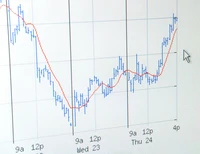
What is graph? Pronunciation and usage in English

graph means . Learn how to pronounce and use graph through vivid examples and easy-to-understand exercises.

Definition & pronunciation of graph

graphnoun

/ɡrɑːf//ɡræf/
Definition & pronunciation of graph

Okay, let's break down how to pronounce "graph" in English. It's a tricky one! Here's a breakdown:

The most common and generally accepted pronunciation is:

  • /ɡrɑːf/ (rhymes with "staff")

    • graff - This is the stressed syllable.
    • -ph - This sound is often a tricky part. It's not a "p" sound. It's a voiceless fricative, like the "f" in "fun," but a bit more breathy. Think of a very soft "h" sound combined with "f."

Let's break it down further:

  1. "graph" (g-r-a-ph): The "g" is pronounced like the "g" in "go."

  2. "graff": This is the stressed syllable. It’s the part that makes the sound.

  3. “-ph”: This is where it gets tricky. Imagine you're saying "f" very quickly and lightly. It's a subtle sound, almost like a very muted "h." You're aiming for a sound similar to the "f" in "fun," but a bit more delicate and breathy.

Tips for getting it right:

  • Listen to native speakers: The best way to learn is to hear it pronounced correctly. Search on Google or YouTube for “how to pronounce graph” – you’ll find many examples.
  • Pay attention to the "ph" sound: Don't try to say "p." Focus on that quick, breathy "f" sound.
  • Record yourself: Practice saying it and record yourself. Compare your pronunciation to native speakers.

Resources to help you hear it:

Would you like me to:

  • Repeat the pronunciation slowly?
  • Give you some example sentences using the word “graph”?

Usage and examples with the word graph in English

Let's break down how to use the word "graph" in English. It has several distinct meanings, so it's important to understand the context. Here's a detailed explanation:

1. As a Visual Representation (Most Common)

  • Definition: A graph is a visual way to represent data, often as a collection of points connected by lines, curves, or other shapes. It's a diagram used to show relationships between things.
  • Types of Graphs: There are many types, each suited for different kinds of data:
    • Line Graph: Shows trends over time (e.g., stock prices, temperature changes).
    • Bar Graph (or Bar Chart): Compares quantities of different categories (e.g., sales figures by product, survey responses).
    • Pie Chart: Shows parts of a whole (e.g., market share of different companies).
    • Scatter Plot: Shows the relationship between two different variables (e.g., height and weight).
    • Area Graph: Similar to a line graph, but the area under the line is shaded, emphasizing the magnitude of the change.
  • Examples:
    • "The graph shows a sharp increase in sales last quarter."
    • "I created a bar graph to compare the results of the two experiments."
    • "The scientists used a scatter plot to analyze the correlation between blood pressure and age."

2. As a Network Diagram (Computer Science & Mathematics)

  • Definition: In computer science and mathematics, a graph is a set of nodes (or vertices) connected by edges. It's a more abstract representation of interconnectedness.
  • Components:
    • Nodes (Vertices): Represent individual items or entities.
    • Edges: Represent the connections or relationships between nodes. These can be directed (one-way) or undirected (two-way).
  • Uses:
    • Social Networks: Representing individuals and their connections on Facebook, Twitter, etc.
    • Computer Networks: Showing how computers are connected to each other.
    • Road Maps: Cities are nodes, and roads are edges.
    • Flowcharts: Representing a process step-by-step.
  • Examples:
    • “This social network graph shows that Sarah is connected to five other people.”
    • “The computer graph illustrates the network’s topology.”
    • “We need to analyze the graph to understand the flow of data.”

3. As a Short Note or Diagram (Informal Usage)

  • Definition: Occasionally, "graph" is used informally to mean a brief, often handwritten or sketched diagram. This is less common.
  • Example: “I quickly drew a graph on a napkin to show what I had in mind.”

Key Phrases & Vocabulary:

  • Data representation: How data is visually presented.
  • Axes: The horizontal (x-axis) and vertical (y-axis) of a graph.
  • Scale: The markings on the axes.
  • Trend: The general direction of the data shown on a graph.
  • Correlation: The relationship between two variables.
  • Graphing software: Programs like Excel, Google Sheets, or specialized statistical software used to create graphs.

Resources for Learning More:

To help me give you even more targeted advice, could you tell me:

  • In what context are you encountering the word "graph"? (e.g., a math class, a data analysis project, a conversation about social media?)

Practice with vocabulary graph

Exercise 1: Fill in the blanks

  1. To illustrate the seasonal changes in temperature, the meteorologist decided to present the data using a clear line ______________.
  2. The latest economic ______________ published by the research institute shows a steady increase in consumer spending.
  3. The marketing team prepared a colorful pie ______________ to highlight the market share of each product category.
  4. Collecting accurate ______________ is crucial before attempting any meaningful analysis or visualization.

Exercise 2: Choose the correct answer (there may be multiple correct answers per question)

  1. Which of the following are effective ways to visually represent trends over time? a) A detailed written report b) A line graph c) A pie chart d) A bar graph
  2. What action verbs are commonly associated with the creation or presentation of a visual data representation like a chart or graph? a) Summarize b) Plot c) Discuss d) Illustrate
  3. A well-constructed graph typically helps in understanding: a) Complex numerical relationships b) Specific individual data points in isolation c) Overall patterns and trends d) Subjective opinions from a focus group
  4. Which of these terms refers to the process of examining data to identify significant findings and draw conclusions? a) Interpretation b) Collection c) Fabrication d) Consultation
  5. When you want to show the components of a whole, such as market share percentages, which visual aid is generally most appropriate? a) A timeline b) A diagram c) A pie chart d) A spreadsheet

Exercise 3: Rewrite the sentences

  1. The company showed a visual representation of their sales figures over the last quarter. (Begin with "The company presented...")
  2. Analysts created visual charts to demonstrate the complex market trends. (Rewrite using a derivative of "graph.")
  3. The presentation included many visual aids to explain the concepts. (Rewrite using a suitable replacement word for "visual aids," avoiding "graph.")

Answer:

Exercise 1: Fill in the blanks

  1. To illustrate the seasonal changes in temperature, the meteorologist decided to present the data using a clear line graph.
  2. The latest economic report published by the research institute shows a steady increase in consumer spending.
  3. The marketing team prepared a colorful pie chart to highlight the market share of each product category.
  4. Collecting accurate data is crucial before attempting any meaningful analysis or visualization.

Exercise 2: Choose the correct answer

  1. b) A line graph d) A bar graph
  2. b) Plot d) Illustrate
  3. a) Complex numerical relationships c) Overall patterns and trends
  4. a) Interpretation
  5. c) A pie chart

Exercise 3: Rewrite the sentences

  1. The company presented a graph of their sales figures over the last quarter.
  2. Analysts created graphical representations to demonstrate the complex market trends.
  3. The presentation included many diagrams to explain the concepts.

Comment ()