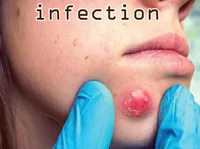
What is infection? Pronunciation and usage in English

infection means . Learn how to pronounce and use infection through vivid examples and easy-to-understand exercises.

Definition & pronunciation of infection

infectionnoun

/ɪnˈfɛkʃn/
Definition & pronunciation of infection

Okay, let's break down how to pronounce "infection" in English. Here's a breakdown:

1. Syllable Breakdown:

  • in- (like "in" as in "inside")
  • fect- (this is the tricky part!)
  • -ion (like "shun" as in "motion")

2. Pronunciation Guide:

  • in-: Sounds like "in" – short and quick.
  • fect-: This is where most people stumble. It's pronounced "fekt" (like the word "fact" without the "c"). The "e" makes a short "e" sound. Think of it as saying "fekt" smoothly into the next syllable.
  • -ion: Sounds like "shun" – as in "motion," "mission," or "tension."

3. Putting it Together:

The whole word is pronounced: "in-fek-shun"

4. Tips & Resources:

  • Listen to Native Speakers: The best way to learn is to hear it! Here are some resources:

    • Google Translate: Type "infection" into Google Translate and click the speaker icon. https://translate.google.com/
    • Forvo: This website has pronunciations by native speakers from various regions. https://forvo.com/word/infection/
    • YouTube: Search for “how to pronounce infection” on YouTube – you’ll find many videos.
  • Focus on the “fekt” sound: Really concentrate on getting that “fekt” sound correct. It’s the key to saying it right.

  • Slow it down: When you’re first learning, say it slowly and deliberately, focusing on each syllable. Then gradually increase your speed.

Would you like me to:

  • Repeat the pronunciation slowly?
  • Give you some example sentences using the word “infection”?

Usage and examples with the word infection in English

Let's break down how to use the word "infection" in English. It's a common word, but it's important to use it correctly.

1. Definition:

At its core, an "infection" is an invasion of a body by harmful microorganisms (like bacteria, viruses, fungi, or parasites) that cause disease. It's basically a problem caused by something living that shouldn’t be living inside you.

2. Common Usages:

Here’s how you’d use "infection" in different contexts:

  • Medical/Clinical: This is where you’ll find the most formal and precise uses.

    • "She has a bacterial infection." (Specifically identifies the type of infection.)
    • “The doctor diagnosed an infection of the urinary tract (UTI).” (A specific location.)
    • “He’s fighting an infection with antibiotics.” (Treatment)
    • "Post-operative infections are a concern." (Relating to a surgery.)
    • “It’s an acute infection – it came on suddenly.” (Referring to the severity and onset)
  • Everyday Language (Less Formal): You'll use it more casually.

    • "I think I have an infection on my foot." (General discomfort or redness.)
    • “She had an infection after her surgery.” (A milder description of illness.)
    • “The cat got an infection in its paw.” (Animal health)

3. Key Phrases & Related Words:

  • “Susceptible to infection”: Means likely to become infected. “People with weakened immune systems are more susceptible to infection.”
  • “Treat an infection”: To use medicine or other methods to make an infection go away.
  • "Fighting an infection": Describes the process of dealing with an infection.
  • “Risk of infection”: The possibility of getting an infection.
  • “Antibiotics”: Medicines used to fight bacterial infections.
  • “Antiviral”: Medications used to fight viral infections.
  • “Fungal infection”: An infection caused by fungi.
  • "Viral infection": An infection caused by a virus.

4. Important Distinctions:

  • Infection vs. Disease: An infection is the cause of a disease. A disease is the symptoms you experience as a result of the infection. You can have an infection without necessarily having a full-blown disease (e.g., a minor skin infection might just cause a small rash).
  • Infection vs. Sepsis: Sepsis is a serious and potentially life-threatening condition caused by the body’s overwhelming response to an infection. It’s more than just an infection itself.

5. Examples in Sentences:

  • “The patient was admitted to the hospital with a severe pneumonia infection.”
  • “Proper hygiene can help prevent the spread of infection.”
  • “After the accident, he developed an infection in his leg.”
  • “The doctor prescribed antiviral medication to treat the influenza infection.”

Resources for More Information:

To help me give you even more targeted information, could you tell me:

  • Why are you asking about "infection"? (e.g., are you studying for a test, writing something, just curious?)

Practice with vocabulary infection

Exercise 1: Fill in the blanks

  1. The rapid spread of the novel virus led to a widespread ______ across several continents, prompting global health warnings.
  2. Proper wound care, including regular cleaning and bandaging, is crucial to prevent bacterial ______ and promote faster healing.
  3. Lab technicians must adhere to strict protocols to avoid ______ of samples, as even trace amounts of foreign substances can compromise experimental results.
  4. Early ______ of the rare genetic condition allowed doctors to initiate specialized treatment plans before symptoms became severe.

Exercise 2: Choose the correct answer (there may be multiple correct answers per question)

  1. Which of the following terms best describes the invasion of an organism's body tissues by disease-causing agents, their multiplication, and the reaction of host tissues to these agents and the toxins they produce? a) Inflammation b) Allergy c) Infection d) Degeneration

  2. Which of the following terms are directly related to the process of microorganisms causing harm within a host organism? (Select all that apply.) a) Immunity b) Pathogen c) Infection d) Symptom

  3. In a medical context, what term describes the presence and multiplication of disease-causing microorganisms in the body that may lead to tissue damage or illness? a) Contamination b) Infestation c) Infection d) Colonization

  4. What is the primary purpose of quarantining individuals exposed to a highly contagious disease? a) To conduct immediate surgical procedures. b) To prevent further spread of the illness to the wider population. c) To enhance the patient's individual comfort. d) To administer experimental medication.

  5. Which term refers to the entire range of signs and symptoms that characterize a particular disease or medical condition? a) Pathogenesis b) Etiology c) Syndrome d) Prognosis

Exercise 3: Rewrite the sentences

  1. The doctor advised the patient that the wound might become unhealthy if not cleaned regularly.
  2. Many people caught the flu because of its highly transmittable nature.
  3. Hospital staff need to be careful to stop the spread of harmful microorganisms between patients.

Answer:

Exercise 1: Fill in the blanks

  1. infection
  2. infection
  3. contamination
  4. diagnosis

Exercise 2: Choose the correct answer

  1. c) Infection
  2. b) Pathogen, c) Infection
  3. c) Infection
  4. b) To prevent further spread of the illness to the wider population.
  5. c) Syndrome

Exercise 3: Rewrite the sentences

  1. The doctor advised the patient that the wound might develop an infection if not cleaned regularly.
  2. The flu's highly infectious nature led to many people catching it.
  3. Hospital staff must implement strict measures to control contagion among patients.

Comment ()