What is podium? Pronunciation and usage in English

podium means . Learn how to pronounce and use podium through vivid examples and easy-to-understand exercises.

Definition & pronunciation of podium

podiumnoun

/ˈpəʊdiəm//ˈpəʊdiəm/
Definition & pronunciation of podium

Okay, let's break down how to pronounce "podium" in English. Here's a breakdown with phonetic spellings and tips:

1. Phonetic Spelling (IPA - International Phonetic Alphabet):

/ˈpɒdɪəm/

  • ˈpɒdɪəm - This is the most accurate way to represent the sound.

2. Breakdown and Explanation:

  • ˈpɒd - The first part, "pod," sounds like "pod" in "podocarp." The "o" is a short, open "o" sound, like in "hot."
  • ɪ - A very short, quick "i" sound, like in "bit."
  • əm - This sounds like "uhm" as in "hum." The 'a' is a short, unstressed sound.

3. How to Say it Aloud:

  1. Start with the "pod" sound – "pod" (short "o" sound).
  2. Quickly add the "i" sound – "pod-i."
  3. Finish with the "uhm" sound – "pod-i-um."

4. Tips for getting it right:

  • Stress: The first syllable ("pod") is stressed - that's where the emphasis goes.
  • Vowel sounds: Pay close attention to the "o" and “i” sounds. They are key to the correct pronunciation.
  • Flow: It should flow smoothly, not choppy.

Resources for Hearing it Pronounced:

To help me give you even more targeted advice, would you like me to:

  • Record an example of how to pronounce it? (If possible, depending on the platform)
  • Focus on the differences in pronunciation in different English accents (e.g., American vs. British)?

Usage and examples with the word podium in English

Let's break down how to use the word "podium" in English. It's a surprisingly specific word with a particular meaning.

1. Core Meaning: A Raised Platform

At its most basic, a "podium" is a raised platform, usually with a lectern (a movable desk with a shelf for papers), used for speeches, presentations, or awards ceremonies. Think of it like a stage small enough for a few people.

2. Common Uses and Contexts:

  • Public Speaking: This is the most common association. "The president took to the podium to deliver his speech." "The student nervously stood on the podium, awaiting their award."
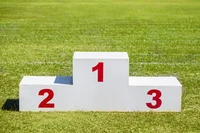
  • Competitions & Awards: Podium is almost exclusively used when referring to the top three places in a competition.
    • "The athletes lined up on the podium to receive their gold, silver, and bronze medals."
    • “She was thrilled to stand on the podium and accept her first place trophy."
  • Formal Events: You'll often see it in connection with:
    • Graduation Ceremonies: "The valedictorian climbed onto the podium to deliver their speech."
    • Political Rallies: “The candidate addressed the crowd from the podium.”
    • Military Parades: “The General stood on the podium, reviewing the troops.”

3. Phrases & Examples:

  • "Stand on the podium": To be awarded a prize or receive recognition. “He’s worked so hard, he deserves to stand on the podium.”
  • “The podium was crowded with reporters.”: Describing the audience surrounding the speaker.
  • “He dominated the podium.”: Meaning he was the most prominent or important speaker. (This is a slightly more figurative use)

4. Origin (Interesting Fact!)

The word "podium" comes from the Latin podium, meaning "footstep." It originally referred to a raised platform where jurors would stand in ancient Rome.

5. Things to Note:

  • Not for Everyday Situations: You wouldn't generally say "He stood on the podium to serve coffee." It's reserved for events where speaking or receiving an honor is key.

Resources for Further Learning:

Do you want me to:

  • Give you more examples of how to use "podium" in a sentence?
  • Explain it in more detail (e.g., the different types of podiums)?

Practice with vocabulary podium

Exercise 1: Fill in the blanks

  1. The keynote speaker approached the ______ to address the conference attendees about the future of technology.
  2. After months of intense training, the athlete finally earned a spot on the ______ at the national championships.
  3. The director instructed the actors to stand on the main ______ for the final curtain call.
  4. Employees who consistently exceed their sales targets often receive public ______ at the quarterly meetings.

Exercise 2: Choose the correct answer (there may be multiple correct answers per question)

  1. Which of the following structures is commonly used both for public speaking and for honoring winners in a competition? a) Lectern b) Dais c) Podium d) Pulpit

  2. In a formal awards ceremony, where would the top three athletes stand to receive their medals? (Select all that apply) a) The starting block b) The podium c) The winner's circle d) The platform

  3. When a CEO delivers a keynote speech at a major conference, what might they stand behind or on? (Select all that apply) a) A lectern b) A podium c) A dais d) A microphone stand

  4. What is a small, sloping stand primarily designed for holding a speaker's book or notes? a) Podium b) Rostrum c) Lectern d) Stage

  5. Which of these words describes a large, often open-air, tiered structure for spectators, typically used for theatrical performances or sporting events? a) Dais b) Rostrum c) Arena d) Amphitheater


Exercise 3: Rewrite the sentences

  1. Original: The top three athletes received their medals on the elevated structure designed for winners. Rewrite using "podium":

  2. Original: The university president stood on a raised platform to deliver her commencement address. Rewrite using "podium":

  3. Original: For the debate, the moderator used a small stand to hold his notes and microphone. Rewrite without using "podium":


Answer:

Exercise 1: Fill in the blanks

  1. podium
  2. podium
  3. stage
  4. recognition

Exercise 2: Choose the correct answer

  1. c) Podium
  2. b) The podium, d) The platform
  3. a) A lectern, b) A podium, c) A dais
  4. c) Lectern
  5. d) Amphitheater

Exercise 3: Rewrite the sentences

  1. The top three athletes received their medals on the podium.
  2. The university president stood on the podium to deliver her commencement address.
  3. For the debate, the moderator used a lectern to hold his notes and microphone.

Comment ()